What Is Stimming & How It Impacts Communication
What is stimming?
You have likely watched a child (or adult) intensely tap their fingers, rock back and forth, or make repetitive noises. This behavior is commonly referred to as stimming. Stimming is short for self-stimulatory behavior. It is the repetition of movements, sounds, or actions that stimulates one or more of the senses, oftentimes to cope with emotions.
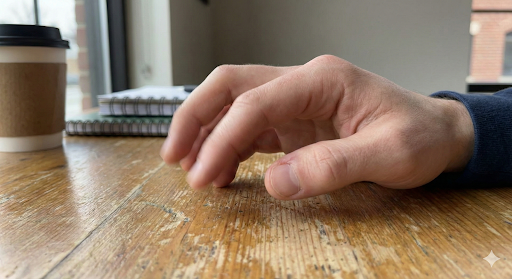
Stimming behaviours can range from subtle nervous habits many do, such as tapping a pencil, to more obvious repetitive actions like hand-flapping, blinking eyes, and snapping fingers.
It is important to note that many people stim. Some may bite their nails, play with their hair, tap their feet, or repeatedly click a pen when bored or nervous. These are the less noticeable types of stimming.
Examples of Stimming
Kids with and without developmental differences may have stimming behaviours. There is a wide range of these behaviours that involve each of the senses: sight, hearing, touch, taste, or movement. Common types include:
Motor/Movement Stimming
- Rocking back and forth
- Hand-flapping
- Finger tapping
- Spinning
- Pacing
- Clapping
Vocal Stimming
- Repeating sounds or words
- Humming, grunting, or squealing
- Echolalia (repeating words or phrases heard from others)
Visual Stimming
- Repetitive touching/rubbing of textures
- Staring at lights or moving objects
- Watching things flicker
- Lining up objects
- Repetitive blinking
- Turning lights off and on
Sensory Stimming
- Repetitive sniffing or tasting
- Chewing on objects
- Repeatedly listening to the same sound
Why do kids stim?
Why does stimming occur? Although it doesn't always appear clear to someone observing, stimming typically serves a purpose.
One of the main reasons that a child may stim is to regulate sensory input. Repetitive motions or sounds can help children who have highly (or under) responsive nervous systems manage that input and feel comfortable.
Children may stim to self-soothe or manage emotions such as stress, excitement, or boredom. The stimming behaviour often calms and grounds them.
For children who are minimally verbal or nonverbal, stimming can be a way to express needs, happiness, or distress.
Do kids with speech delays stim?
There is no simple cause-and-effect relationship that says that speech delay causes stimming or vice versa; however, some children with speech delays do stim. But, both speech delays and stimming can also be associated with underlying neurodevelopmental differences, such as:
- Autism Spectrum Disorder (ASD) - One of the main diagnostic behaviors for autism is stimming. Autism may occur alongside speech delays.
- Sensory Processing Difficulties - Children with sensory processing challenges may use stimming to help regulate. These sensory challenges can also impact speech and language skills and development.
- Anxiety or Overstimulation - Kids who struggle with communication can easily become overwhelmed, which may increase stimming behaviors.
In other words, stimming alone does not cause speech delay. However, it is not uncommon for it to appear in the same children who are also experiencing delays in speech. This is especially true when one of the above-mentioned neurodevelopmental differences is present.
Stimming and Speech Development
Clear speech requires that multiple parts of the body work together seamlessly, such as the lungs, larynx, vocal folds, mouth, and nose. It also requires complex sensory processing like hearing sounds, controlling the mouth, and using memory to form words. A child who is trying to manage sensory overload by stimming may have a harder time both listening and forming speech.
Stress and emotional regulation can negatively impact communication. If a child is overwhelmed or anxious, they may stim more often, which makes it more difficult to engage in social interactions and communication. Supports such as speech therapy, sensory tools, or structured routines can help to reduce stress and make space for more effective communication.
There are also forms of stimming that involve language repetition. An example of this is vocal stimming and echolalia, which is defined as repeating phrases or sounds. Echolalia can sometimes be a normal part of speech development, and also can be a symptom of autism. Speech therapy is a helpful tool for shaping echolalia into functional communication.
When Stimming and Speech Delay Appear Together
If a child has frequent noticeable stimming behaviours and a speech delay, a comprehensive evaluation is recommended to determine whether an underlying neurodevelopmental condition may be contributing to both. If this is the case, a support team that includes speech therapy can make a meaningful difference. Speech therapy can:
- Support communication development
- Help the child use language to express needs instead of only using non-verbal behaviors.
- Partner with families on strategies that also respect the child's sensory and emotional needs.
Meeting Children Where They Are
Stimming is a natural and common behaviour for many; however, when it is frequent and intense, determining the cause and getting the proper support is recommended. Understanding that stimming is a form of sensory and emotional regulation, rather than a problem, helps families approach it with insight and empathy.
Virtual speech therapy can be a beneficial support for children who stim and are struggling with their communication skills. Because sessions with Great Speech take place in a familiar home environment. Many children feel more comfortable and regulated. This can naturally reduce stress-related stimming, making it easier to communicate and progress.
Our speech therapists are trained to recognize stimming as a form of sensory regulation rather than a behavior that needs to stop. Instead of trying to suppress these movements or sounds, we focus on building functional communication skills: helping children express needs, emotions, and ideas in ways that feel accessible to them.
Through play-based activities, visual supports, individualised therapy plans, and family involvement, speech therapy with Great Speech meets children where they are while respecting each child’s specific needs. Schedule your free introductory call today!