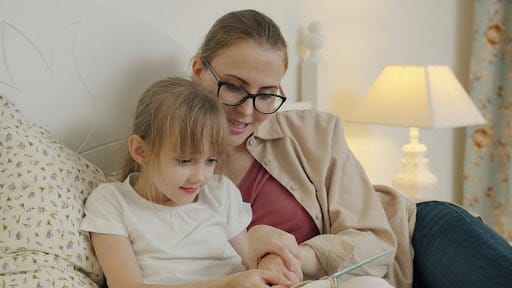
How to Improve Reading Comprehension: Tips for Parents
Reading is about more than just getting through the words on a page. A child can read a sentence perfectly and still have no idea what it means. They may finish an entire chapter book but then struggle to tell you what the book was about or answer simple questions about it.
If this sounds familiar, you may be wondering how to improve reading comprehension and what you can do at home to help your child. Thankfully, reading comprehension can usually be strengthened with regular practice and the right strategies. Small changes to the way that you read together can help your child become a more fluent and confident reader.
Why is Reading Comprehension Important?
Reading comprehension is the ability to understand, remember, and make meaning from what you read. It involves a lot more than just recognizing and reading words one by one. Children need vocabulary, background knowledge, language skills, attention, memory, and the ability to make connections to successfully understand what they read. They also need to understand things like sentence structure, sequencing, and the differences between important details and information that is less important.
The National Center on Improving Literacy notes that children can struggle with reading for many different reasons, including difficulties with sounds, language, or understanding what they read. This is why you can’t simply tell a child who struggles with reading to just “read more”.
How to Improve Reading Comprehension at Home
Parents do not need to turn reading time into another homework assignment or chore. In fact, keeping practice relaxed and enjoyable can make the most difference.
Here are some simple ways to help your child build stronger comprehension skills at home.
- Ask Questions Before, During, and After Reading
Talk about the book throughout the reading instead of just waiting until it's finished. Before starting, you can look at the title together and ask, “What do you think this story will be about?”.
While reading, you can ask questions such as “What do you think will happen next?”, “Why did the character do that?”, “What does that word mean?”, “How do you think the character feels?”, “What is the most important thing that happened?”.
Ask your child to retell the story in their own words when finished reading. The goal of all of these questions is not to quiz them; it's to help them slow down, think about what they are reading, and notice when something does not make sense.
- Connect Storytime to Something They Already Know
Children often find new information easier to understand when they can connect it to something familiar to them. For example, if you are reading a book about a trip to the beach, talk about your family’s last beach trip. If a character is nervous about starting school, ask your child whether they have ever felt the same way. These connections help the child remember and understand what they have read.
- Use Everyday Conversations to Build Vocabulary
A strong vocabulary can make reading easier because children are more likely to understand what they are reading when they recognize the words and concepts. When your child comes across a word that is unfamiliar to them, stop and talk about it. Ask what they think it means based on the sentence that it's in, and then explain it in language that they can easily understand and give them another example. You can also build their vocabulary outside of reading by talking about new words during meals, errands, and everyday activities.
- Encourage Your Child to Retell What They Read
One of the simplest ways to check your child’s reading comprehension is to ask your child to tell you what happened in what they read. For younger children, you might ask them to explain the beginning, middle, and end of the story, while older children can identify the main idea, important details, a problem and solution, or the author’s main point. If your child has problems with these questions, you can go back through the text together and look for those details that matter most.
- Make Predictions and Inferences
Good readers do not just absorb the information that they read; they make guesses, notice clues, and draw conclusions as well. Pause during a story and ask your child, “What do you think is going to happen?”, then ask your child what made them think that way. You can also practice making inferences (educated guesses). For example, if a character walks into a house soaking wet and carrying an umbrella, ask your child what they can figure out from this information even if the book never directly mentions that it's raining. These conversations teach children to look beyond the exact words on the page.
- Let Your Child Choose Some of the Reading Material
Practicing reading is more effective when children are interested in what they are reading. Let your child choose books about animals, sports, fantasy, mystery, science, graphic novels, or whatever topic catches their attention. Magazines, comics, recipes, and age-appropriate websites are also great options for practicing reading comprehension. The goal is to help your child see that reading is something useful and enjoyable, not just another task that they have to complete before they can do something more “fun”.
- Read Together
Reading aloud together should not stop once a child can read on their own. Take turns reading pages, read a book together, or listen to an audiobook and discuss the story afterward. Hearing language modeled can expose children to vocabulary and sentence structure that may be more advanced than what they can comfortably read on their own.
For more ideas, we have a great guide that digs deeper into this topic: 7 Reading Comprehension Strategies for Kids to Put Into Action Today.
When Reading Practice Might Not Be Enough
At times, despite regular reading and support at home, children can continue to struggle. You may notice that your child can read the words without a problem, but they cannot explain what they mean. They may have trouble following multi-step directions, remembering information they have just heard, learning new vocabulary, telling a story in the correct order, or understanding complex sentences.
Other signs can include difficulty with rhyming, mixing up or leaving out sounds, avoiding reading, or understanding a story much better when someone else reads it aloud. These difficulties do not necessarily mean that a child has a speech or language disorder; however, they can be signs that it is worth looking beyond just more practice for their reading.
If you are seeing several of these signs, consider talking with your child’s teacher and also seek a speech and language evaluation. Book an appointment with Great Speech to get started.
Speech and language are closely connected to literacy, and we break this connection down further in The Overlooked Connection Between Speech Disorders and Reading Challenges.
How Can Speech Therapy Help With Reading Comprehension?
Speech therapy is not just about helping children pronounce sounds correctly. A speech therapist can work with children on many of the underlying skills that support reading comprehension, including vocabulary, understanding and using language, following directions, narrative skills, sentence structure, phonological awareness, and organizing and expressing ideas.
For example, a child may be able to decode a word but not understand what it means because their vocabulary is limited. Another child may understand individual sentences but struggle to connect the information across a full paragraph.
You do not have to figure it all out on your own. A speech therapist can evaluate these areas and create an individualized plan based on the child’s specific needs. Schedule your free introductory call to get started.
Our Speech Therapy services at Great Speech are also covered by most major insurance providers. We are proud to be in-network with leading insurance plans like Aetna, Cigna, Curative, Centivo, Wellcare, AllWell, Ambetter Health, Humana Military, TriWest & more!. Visit our insurance page to find out more.