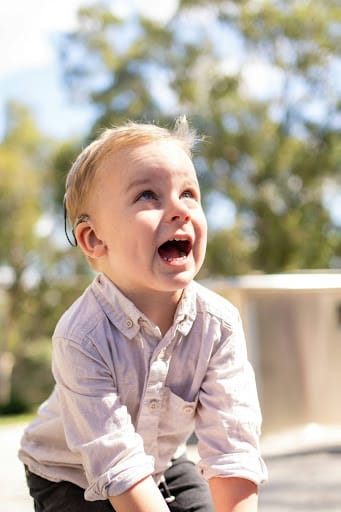
Speech Delay or Hearing Loss: How Loved Ones Can Spot The Difference
It’s natural for parents and caregivers to feel concerned when their child isn’t meeting their expected language milestones. They often wonder, “Is this a speech delay, or could my child have hearing loss?” Understanding the difference between the two, as well as recognizing when both are connected, is important for early intervention as well as long-term communication development, and overall confidence and well-being.
Can Hearing Problems Cause Speech Delay?
Yes, hearing problems can cause speech delay. Hearing is the foundation of how speech and language skills are developed. A child who cannot clearly hear sounds (especially soft speech sounds) has less access to the building blocks of language. Over time, this can slow the pace at which they learn to speak and understand language.
According to pediatric and audiological research, hearing loss can contribute to delays in speech development in a significant portion of young children. One study found that among children who were evaluated for speech delay, 27.4 % had moderate to severe hearing loss.
Also, hearing loss does not have to be significant to affect speech development. Even mild or unilateral (one ear) hearing loss can make it harder for a child to process sounds in everyday environments, especially when there is background noise (such as in a classroom or a playground).
Why Hearing and Speech Development Go Hand-in-Hand
Language is learned by listening first. Babies start absorbing speech sounds even before they begin to talk.
A child may be born with hearing loss due to factors such as genetics, physical abnormalities, or prematurity. Others may experience hearing loss due to ear infections, fluid build-up, or other auditory issues.
Children whose access to sound is limited may:
- Babble less or stop babbling earlier than expected
- Have a smaller vocabulary than their peers
- Produce unclear or mispronounced sounds
- Use shorter, simpler sentences
- Appear inattentive
- Not respond consistently when spoken to
These patterns occur because speech development is a “use what you hear” process. When input is reduced or inconsistent, output (spoken language) is also affected.
Speech and Language Milestones: What's Typical?
Most children follow a fairly predictable path in learning speech and language:
- 0-6 months - Coo’s, smiles at sounds
- 6-12 months - Babbles, responds to their name
- 12-18 months - Says first words
- 18-24 months - Combines words into simple sentences
- 2-3 years - Vocabulary expands at a fast rate
We have many blogs on the topic of speech milestones on our website. If you want to read further into this topic, we recommend starting with the following:
- Language Development Milestones: How Speech Therapy Can Help
- 1-Year-Old Speech Milestones
- 18-Month-Old Speech Milestones
- 2-Year-Old Speech Milestones
- 3-Year-Old Speech Milestones
A noticeable gap between a child’s skills and expected milestones is a reason to check further; however, not all speech delays are caused by hearing issues. Speech delays can also stem from developmental disorders, motor speech difficulties, neurological conditions, or simply late talking without an underlying reason. What makes hearing-related speech delays unique is how they affect access to language input rather than just the overall mechanics of speaking.
How to Spot the Difference
Distinguishing hearing loss-related speech delay from other types can be tricky, especially in young children who cannot yet verbalize what they are experiencing. Still, there are some cues that can help loved ones recognize when hearing might be part of the issue. Some of these include:
Are they responsive to sound?
A child with hearing loss may:
- Not startle or turn towards loud sounds
- Fail to respond when their name is called
- Seem selectively “tuned in” (responds only to very loud noises or noises very close to them)
A child who is hearing normally would typically react consistently to familiar voices and sounds in their environment.
Speech and Language Patterns
Parents and caregivers may notice:
- Limited vocabulary compared to their peers
- Struggles with differentiating certain speech sounds
- Consistent mispronunciations (especially soft sounds like “s”, “f”, or “k”)
- Shorter sentences or similar grammar than is expected for their age
These patterns suggest that the child is not clearly hearing the full range of speech sounds, making it harder to learn and reproduce them.
Difficulty in Noisy Environments
A child with hearing issues often struggles most when there is background noise. If the child “tunes out” in a noisy environment such as a classroom, playground, or around TVs, it can indicate difficulty with auditory processing or hearing.
Behavioural Issues and Frustration
When a child can’t understand what they are hearing, they may become:
- Easily frustrated
- Withdrawn from social situations
- Hesitant to communicate
- Exhausted after listening efforts
Lack of clear communication can strain a child’s emotional well-being as well as their social development. Unfortunately, this greatly increases the effects of both the hearing loss and speech delay.
What if Hearing Loss is the Underlying Cause?
If hearing loss is suspected, it's important to seek a professional evaluation. Early intervention is key. Audiologists can assess and treat all issues related to hearing loss.
Children may need speech therapy to catch up on missed language skills once the hearing issue is fixed. Speech therapy begins with an evaluation by the speech and language pathologist to identify the specific areas of concern and establish realistic and practical goals. Speech therapists can provide targeted strategies for vocabulary, articulation, grammar, and expressive language. Regular speech therapy appointments will be scheduled to monitor progress until goals are reached and skills are mastered.
Schedule a free introductory call to get started!