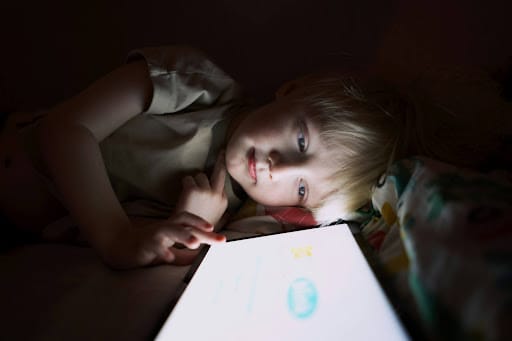
Is Screen Time Causing Speech Delays? What The Data Shows
If you’re a parent today, you’ve probably wondered if screen time can negatively impact your child’s speech. This is a fair concern that is getting more attention as tablets, phones, and TVs are becoming a normal part of everyday life for many, including toddlers.
The short answer is that yes, screen time can contribute to speech delays, but the long answer is not that simple.
The Rise in Screen Time in Early Childhood
Screens are everywhere. From video calls with grandparents to educational apps and cartoons, and even homework assignments from school, digital media is now woven into childhood, and according to a census from Common Sense Media in 2025, regarding children aged 0-8, 40% of children have a tablet by age 2, and nearly 1 in 4 have a personal cellphone by age 8. The average screen time for children aged 0-8 is about 2.5 hours a day, which hasn’t changed since the last census in 2020, but it does note that the way screen time is being used has changed.
It is no surprise that many babies and toddlers are exposed to screens regularly, and while that doesn’t automatically mean trouble, it does change the environment that these children are developing in, and when it comes to speech and language, their environment matters a lot.
What Does Research Say About Screen Time and Speech Delays?
The evidence that links higher screen time with an increased risk of speech and language delays is continuing to grow. One widely cited study included 894 children at their 18-month checkup. According to their parents, 20% of these children averaged 28 minutes of handheld device use daily. Using a screening tool for language delay, researchers found that the more handheld screen time a child’s parent reported, the more likely the child was to have expressive speech delays, and there was a 49% increased risk for each 30-minute increase in this handheld screen time.
Another study that looked at children ages 1-4 found that higher daily screen time (especially over 4 hours) was associated with a significantly higher rate of speech delay. These numbers are concerning, and it’s one of the reasons why pediatricians often recommend limiting screen exposure, especially for children under 2.
One of the more compelling studies we found had researchers reduce screen time in children who were already experiencing speech delays. The children's vocabulary dramatically improved compared to those who kept their usual screen time habits.
If you want to dig deeper into the research, we feel that the following study is worth reading: Relationship Between Speech Delay and Smart Media in Children: A Systematic Review
Why Screen Time Can Affect Language Development
The connection between screen time and language delays is about more than simply screens being “bad”; it's about what the screens replace. Young children learn language through interaction.
Speech develops through:
- Back-and-forth conversation
- Eye contact
- Facial expressions and body language
- Taking turns in conversation
- Hearing words in real-life contexts
Screens, especially when used alone, do not provide that same interaction, even when it’s so-called “educational” content.
Thankfully, Screen Time Isn’t Everything
It can be easy to simply blame screen time for a child’s speech delay, but it is important to note that speech delays can be influenced by many things, including but not limited to:
- Genetics
- Hearing ability
- Developmental Differences
- Environment
- Parent-child interaction
- Social exposure
Simply speaking, while screen time can contribute to speech delays, there can be many other causes.
We have a great blog titled Speech Delays Are Increasing: Here Is What The Data Shows that dives deeper into this topic.
The Quality Matters More Than You May Think
Not all screen time is created equal, and there is a big difference between a child watching fast-paced videos alone for hours and a parent watching and talking through a show with their child. In fact, engaging with your child during screen use can actually support language development. You can do this by asking questions, labeling objects, and connecting what's on the screen to real life.
What is Screen Time Replacing?
For some children, the more time that they spend on screens, the less time that they spend doing other things that help build their language skills, such as:
- Talking with family
- Using their imagination during play
- Reading books
- Socializing with other children
What Should Parents Watch For?
If you are concerned about your child’s speech, here are a few signs that are worth paying attention to:
- Limited vocabulary for their age
- Not combining words by age 2
- Difficulty following simple directions
- Reduced eye contact or interaction
- Choosing screens over people
These signs don’t automatically mean that something is wrong, but they can be red flags that should be looked into further. If your child is showing any of these signs, it’s worth seeking a speech evaluation. Book an Appointment to get started.
Practical Guidelines for Screen Time
You don’t need to stop screen time completely, and that's an unrealistic ask for many families. Instead of completely eliminating it, it's all about balance.
For babies and toddlers, solo screen time should be avoided when possible, and human interaction is always best. For preschoolers, screen time should be limited and intentional. We recommend slower-paced, high-quality content, and when possible, watch with your child and use it as a teaching tool. For children of all ages, avoid screens during meal times and before bed and make lots of time for conversation, play, and reading.
Regardless, what matters most isn’t how much time your child is spending looking at a screen; it matters how it's used, what it replaces, and whether interaction with others is still happening.
When to Consider Speech Therapy
If your child’s speech seems to be delayed, it’s worth getting a professional opinion, and early intervention can make a significant difference. If you are wondering whether your child might need support, that's already a good reason to schedule a call with Great Speech. Even a quick consultation can give you peace of mind.