Speech Delays Are Increasing: Here Is What The Data Shows
If you feel like more children are struggling with their ability to communicate than ever before, you’re not imagining it, and speech-language pathologists (SLPs) have been noticing this as well.
Speech and language delays have always been expected for some children as they develop; however, multiple recent studies suggest that the number of children experiencing delays may be rising, especially since the COVID-19 pandemic. Understanding why this is happening is important to supporting these children early - when it matters most.
If you or your child is experiencing speech or communication difficulties, help is just a click away. Great Speech offers convenient online speech therapy support for children, adults, and seniors. Schedule a free introductory call today to see how online speech therapy can help you.
A Growing Concern, Backed by Data
Speech and language delays are not rare, and even before the pandemic, they were among the most common developmental concerns in young children. Although they are not new, they are showing up more often now than ever before, and there are many studies that back this up.
One widely cited study published in JAMA Pediatrics found a significant rise in speech delay diagnoses after mid-2020, suggesting that the pandemic may have played a role. While researchers are still working to fully understand the long-term implications, the direction of the trend is clear: more children are entering early childhood with communication challenges than in previous years.
The Pandemic’s Lasting Impact on Early Development
In order to understand why this increase is happening, it helps to look at how dramatically children’s environments changed during the pandemic. Early language development depends heavily on interaction. This includes hearing words, responding to caregivers and peers, and engaging in everyday conversation. But during lockdowns, many children experienced:
- Reduced access to daycare and preschool
- Limited interaction with peers
- Fewer social outings and shared experiences
- Increased stress within the household
Researchers have stated that these disruptions likely contributed to developmental delays, particularly in communication skills. For children who were born just before or just after the pandemic, these changes occurred during some of the most critical periods for language development.
How Screens Can Affect Language Development
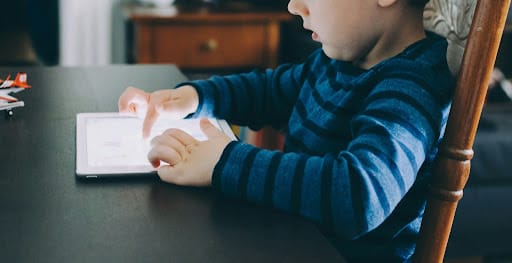
How much time children spend looking at a screen is another factor that has gained a lot of attention recently. Screen time has become a normal part of modern childhood, but its relationship with language development is more complex than many people believe.
A recent systematic review of multiple studies on screen use and early language development found that the impact of screen time is mixed and highly dependent on how it is used, not how long it is used.
The researchers consistently found that higher amounts of screen time were associated with differences in language development, particularly in early childhood; however, one of the important takeaways is that not all screen time is equal. The review highlights that the varying outcomes are mostly based on:
- What type of content it is (educational vs. non-educational)
- Level of parental involvement
- Whether screen use is passive (watching) or interactive (engaging with a caregiver)
Children in the studies were typically exposed to between 1.4 and 2.6 hours of screen time per day, and the effects on language development differed depending on these factors and not just their total exposure time. The research suggested that screen use may become more concerning when it replaces real-life interaction, as those interactions are essential for building communication skills. On the other hand, when caregivers actively engage with the child during screen time in ways like asking questions, labeling objects, or watching together, there are fewer negative effects.
This suggests that the issue is not the screens, it's what they are replacing. Young children need back-and-forth interaction, not just listening, to develop their vocabulary and language skills.
More Awareness, More Diagnosis
It is important to recognize that not all of the increases in speech delay are necessarily negative. Part of what we are seeing may be due to being more aware of this issue and identifying speech delays earlier than in the past.
Parents today are more informed about developmental milestones, and pediatricians are more proactive about screening. As a result, children who might have previously gone undiagnosed are now being identified earlier. This is a positive shift because early identification leads to earlier support, which is linked to stronger outcomes.
Environmental and Social Factors Still Matter
There are many other factors besides the pandemic and screens that can shape a child’s language development. Other factors, such as the following, all play a role in speech and language development:
- Caregiver interaction
- Time spent in conversation or social situations
- Access to early learning resources
For example, reduced interactions between a child and their family members, whether due to stress, time constraints, or other demands, have been linked to an increased risk of speech delay as well as factors like limited access to peers, books, or early intervention services.
When Speech Delays Signal Something More
It's important to understand that while many speech delays are temporary, in some cases they can be an early sign of a broader developmental difference, such as autism spectrum disorder (ASD). Speech and language delays are often one of the first things that parents notice with children who have ASD, but the delay is often accompanied by other signs like limited eye contact, fewer gestures (like pointing or waving), and less interest in social interactions in general.
Regardless of the cause of the speech delay, identifying it early and getting the proper support leads to better long-term outcomes.
Why Early Intervention Matters
Even with the rising numbers, one thing hasn't changed: many cases of speech and language delays are highly treatable, especially when addressed early.
The challenge today is not just identifying delays, but also ensuring that the child has access to quality support in a timely manner. In many areas, such as schools, the demand for speech therapy services has increased. This leads to longer wait times for both the assessment and treatment.
This is one of the many reasons why virtual speech therapy models like ours at Great Speech are invaluable, as they help families:
- Access care sooner
- Reduce barriers like travel and scheduling
- Maintain consistency
- Access top-tier speech therapists, not just the one that's closer to you geographically
We Can Help
If you are concerned that your child has a speech delay, it's important not to panic. Every child develops at their own pace, but if something feels off, it's worth reaching out to schedule a free introductory call.
Early signs of a speech delay include:
- Limited vocabulary for their age
- Difficulty combining words
- Trouble following simple directions
- Reduced interest in communication
Although the rise in speech delays is real, it's also understandable given the changes that children have experienced in recent years. From pandemic disruptions, increased screen use, and evolving family dynamics, early childhood looks very different today than it did even a decade ago.
With the right approach, most children can make great progress and catch up to their peers. Book an appointment with Great Speech to get started today.